
Chinese smartphone maker Huawei tends to go big with its flagship phones, and the Ascend Mate 7 is no exception. In addition to a crisp, full HD display and a blazing octa-core processor, the metal Mate 7 touts a rear-facing fingerprint reader that trumps the iPhone 5s and Galaxy S5 in terms of functionality. We got up close and personal with the Ascend Mate 7, which will launch in select markets this October starting at €499 ($646) for a 16GB model and €599 ($775) for the 32GB version.
Design
The Ascend Mate 7 is all about premium looks, with a 6.18 x 3.19 x 0.31-inch, 6.53-ounce body made 95 percent of metal. Available in Space Gray, White and Gold, the slim smartphone packs a volume control switch and textured power button on the left and dual SIM card slots on the right. The device’s smooth back panel sports a 13-MP camera, a small speaker and the Mate 7’s unique fingerprint reader.
Fingerprint Reader
Smartphone fingerprint readers are slowly gaining traction thanks to the Apple iPhone 5s and Samsung Galaxy S5, but the finger scanner on the Mate 7 could potentially blow those two devices away. Located on the rear of the phone, the Mate 7’s 1.22 x 1.22-millimeter fingerprint reader is being touted as the world’s first to feature single-touch activation.

So far, it lives up to those claims. After programming my pointer finger to the Mate 7, I was able to unlock the phone with a quick tap on the scanner. The phone’s fingerprint reader goes beyond basic security though; you can lock away specific apps or folders to your fingerprint, and register your friends’ fingers so that they can tap-in for guest mode. The scanner even works as a shutter for the camera app, and it worked pretty handily in my testing.
Display

According to Huawei, the Ascend Mate 7’s 6-inch, 1920 x 1080-pixel IPS screen is the first to use negative liquid crystal display technology. It also has an extremely thin bezel for maximum screen space, touting an 83 percent screen to body ratio. The phone’s colorful, customizable home screens looked bright and vivid, as did a 1080p clip of Guardians of the Galaxy.
Camera
With a 13-MP, 4th-generation Sony camera sensor, the Ascend Mate 7 provides solid shots while borrowing some of the Galaxy S5’s best camera features. All-focus works like the S5’s Selective Focus, allowing you to highlight specific portions of a close-up photo after you’ve taken it. When using the 5-MP selfie cam, the camera app gives you a 2-second countdown to ensure that you’re looking right at the sensor and not the screen.
Battery Life and Emotion UI
Thanks to its octa-core processor and 4,100-mAh battery, the Mate 7 can easily optimize power consumption for extra-long battery life. Huawei claims that you’ll get more than 2 days of basic use on a single charge, while heavy usage will last you roughly a day and a half.
Huawei’s new, Android-based Emotion UI 3.0 allows for deep home screen and app icon customization, with a handful of attractive preset themes like the golden Magazine theme and the Touchwiz-esque Colorful theme. If you want to dig deeper, Huawei allows you to toggle individual settings for fonts, app icon style and lock screen transitions.
Outlook
Big, bright displays and long-lasting batteries are the name of the game for Huawei, and the Ascend Mate 7 looks to combine these features with a highly useful fingerprint reader and a solid camera. We look forward to giving the Mate 7 our full review treatment when it arrives late this year.
 It’s easy to mistake Microsoft’s Nokia Lumia 830 for a premium smartphone because it looks like one — but it won’t be priced like one. Sporting a silver-brushed build, the upcoming midrange handset boasts some neat software features and a sharp PureView camera for its €330 unlocked price tag.
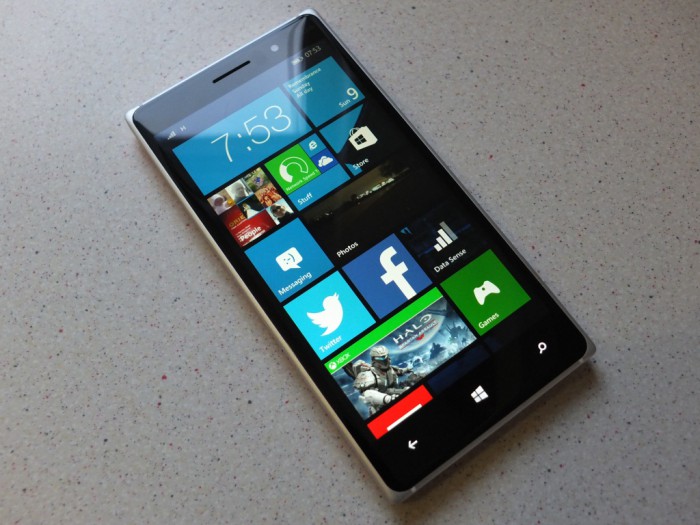 generally pleased with what we saw.The phone’s 5-inch, 1280 x 720-pixel display looked crisp and bright, as did the photos we took with the device’s Zeiss Optics-branded rear camera. The handset ships with Microsoft’s Lumia Denim software update, which means you’ll get to take advantage of features like 4K video recording, faster camera shooting and hands-free Cortana activation.
 The Lumia 830 is powered by a 1.2-GHz quad-core Snapdragon 400 processor, with 1GB of RAM and 16GB of storage. If you need more space, the 830 comes with 15GB of OneDrive cloud storage and supports up to 128GB of extra space via microSD. The phone supports Microsoft’s newly announced Lumia accessories, namely the Smart Wireless Charger and the Microsoft Screen Sharing for Lumia Phones HD-10 dongle, which lets you cast your 830’s screen to your television.

 I have to admit that using the BlackBerry Passport made me miss the tactile feel of a real, physical keyboard on a smartphone. It's actually hard to make a typo on this ultrawide, sculpted layout, although I'm not a fan of the spacebar being in the middle of the third row.

